September 20, 2026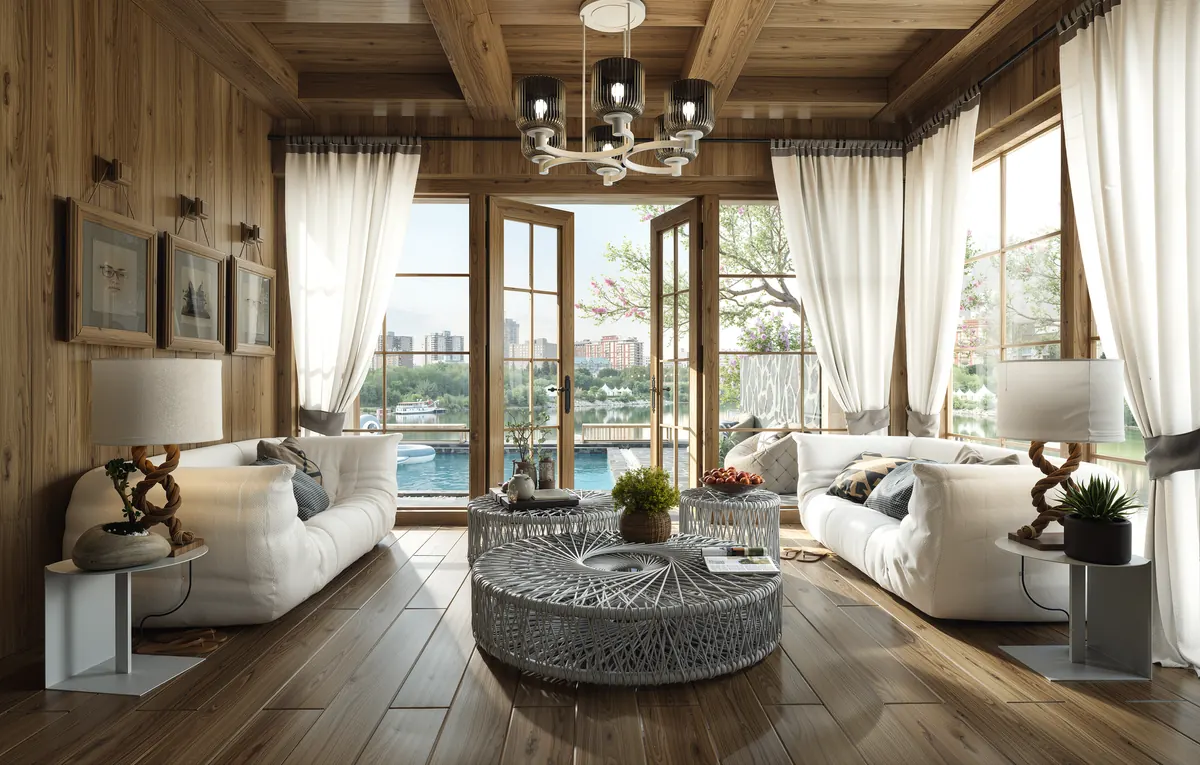
A cottage by the sea is a generous thing to own and an awkward thing to furnish. The rooms are often small, the ceilings low, the windows narrow — and the view is already doing more decorative work than anything you could carry through the door. The temptation is to fill the gap with shells, rope, model boats and a painted sign. Resist it. The coastal rooms that stay restful are quiet, textured and slightly under-furnished, with every object earning its space.
Begin with three colours, not a theme
Coastal decorating goes wrong when it turns into costume. Anchors and lobster pots are charming in a pub; in a three-metre sitting room they shout. Build a palette from the place itself, and keep it to three colours plus one accent.
- A pale base. Chalk white, limewash, or an off-white with a grey or green undertone. Put it on walls, ceilings and large joinery, where it will bounce what light there is around the room.
- A mid-tone taken from outside. Driftwood grey, wet-sand beige, shallow-water green, faded denim. Use it on the sofa, the rug or the curtains.
- A dark anchor. Deep navy, slate or soft charcoal, used sparingly — a lampshade, a chair frame, the edge of a door. Small rooms need one dark note or they float.
- One warm accent. Terracotta, aged brass, a russet cushion, a bowl of lemons. Warmth is what stops a coastal scheme turning cold and clinical.
Test paint in the actual room. Seaside light is cooler and more changeable than inland light, and a colour that reads as soft grey in a shop can turn icy on a north-facing wall.
Let texture do the work that pattern used to
In a compact room, pattern competes with the view. Texture doesn't. You can layer linen, wool, jute, rattan, rough plaster and painted tongue-and-bead boarding quite heavily and the room will still feel calm, because nothing is arguing for attention.
- Slubby linen or cotton curtains, unlined, reaching the floor.
- A wool or wool-blend throw over the back of a chair. It softens a hard frame and earns its keep on cool evenings.
- A jute or flatweave rug. Sisal is tougher but scratchier underfoot; jute is softer and cheaper to replace.
- One or two baskets, seagrass or willow, for logs, blankets, or the tangle of leads and sunglasses by the door.
If you want pattern, keep it to two and keep both small-scale and low contrast: a faded stripe on a cushion, a subtle ticking on a blind. Skip the big statement print. It will win the argument with the sea.
Design the storage before you design the room
Small cottages fail on clutter, not on style. A seaside house also has to store things other homes don't: wellies, wet coats, beach bags, towels, buckets, sometimes a bodyboard or a basket of logs.
Work out what has to be hidden
Walk in the front door and list everything that currently lands on a surface. Coats. Shoes. Keys. Post. Then decide where each item lives, and buy or build the box that suits it.
- A bench with a lift-up lid in the hall — boots inside, cushions on top.
- Hooks at two heights: adult height for coats, lower for bags and the dog lead.
- A tall, shallow cupboard rather than a wide one. It takes less floor and holds more than you expect.
- Under-bed drawers, or a bed with storage built in, for spare bedding and out-of-season clothes.
- An old trunk doubling as a coffee table, with the games and blankets inside.
- Labelled baskets on top of a wardrobe. Out of sight isn't the same as organised, but it is a start.
Buy storage to fit the gap, not the other way round. Measure the alcove, the awkward corner, the space beside the chimney breast — and only then go shopping. A fitted shelf in an ugly recess will do more for the room than a new sofa.
Choose fewer, larger pieces
There is a myth that small rooms need small furniture. They usually need less furniture, in slightly larger pieces. One generous two-seater sofa, a proper armchair, a low table and a slim bookcase will make a compact sitting room feel calmer than five delicate chairs and three occasional tables. Fewer items means the eye can rest.
Keep legs visible where you can. Furniture on slim legs, or a plinth that lifts it clear of the floor, lets the floor run on and the room reads bigger. For a dining space that has to double as a desk, a gateleg or wall-mounted drop-leaf table is hard to beat: open it for four, fold it flat when you're finished.
Treat light and the view as part of the scheme
Curtains that block a sea view waste the best thing in the house. Keep window dressings simple — shutters, a plain roller, café curtains, a lined roman blind in pale linen — and pull them clear of the glass during the day.
Then light the room in layers rather than with one bright ceiling fitting: a dimmable overhead, a table lamp beside each seat, a small floor lamp in the corner that would otherwise be dead space. Choose warm-white bulbs. Hang a mirror opposite a window, where it will double the daylight instead of reflecting a dark corner.
Materials that cope with salt, sand and damp
Coastal air is hard on furnishings. Salt corrodes untreated metal, sand grinds into weaves, and humidity makes cheap board swell. Painted timber, wool, cotton, linen, seagrass, jute and stoneware all cope reasonably well. Bare iron and anything that depends on a perfect finish will not.
- Two mats at the door — a coir one outside, a washable cotton one inside.
- Wipe metal fixings and fittings with a dry cloth now and then. Salt film does quiet damage over time.
- Keep trickle vents and airbricks clear, and open windows when you can. These rooms need to breathe as much as you do.
If the cottage has persistent damp, condensation or a musty smell in the walls, don't paper over it with fresh paint and a dehumidifier. Ask a qualified surveyor or damp specialist to look at it before you decorate.
A room that breathes
When the room feels nearly finished, take something out. Clear the mantelpiece down to one or two objects, put the spare cushions in a basket, and leave a surface or two genuinely empty. Small rooms are improved far more by what you remove than by what you add.
Then wait a season before buying anything else. Coastal decorating works best slowly: a chair found in a junk shop, a lamp inherited from a relative, a rug that has faded in the sun. The result looks collected rather than styled, which is exactly the point.
Photo: The Ghazi / Pexels